Field & Woven Wire Fence in Topeka, KS
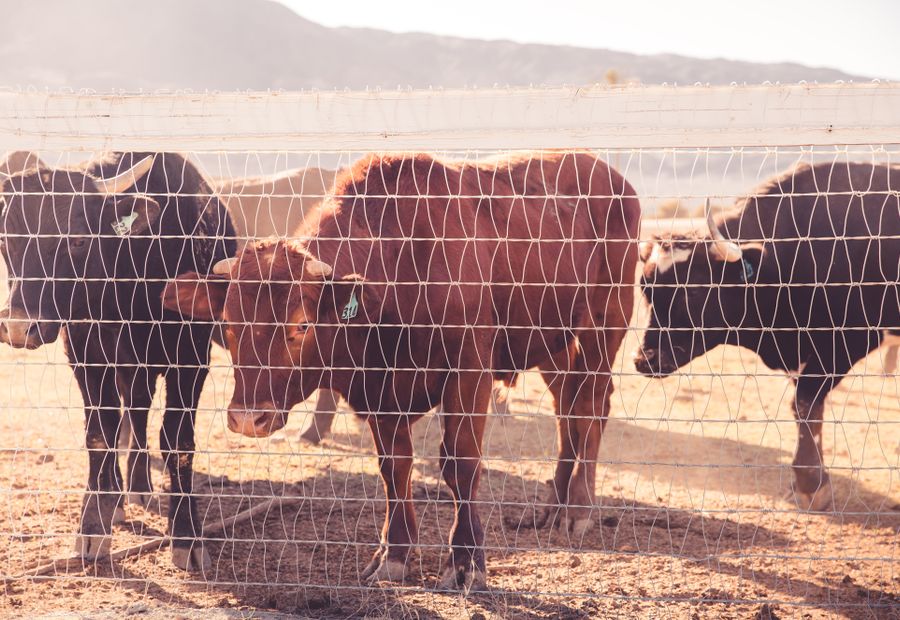
Topeka Farm Fence installs field fence and woven wire fence for cattle, horses, goats, and sheep on pastures and small acreages around Topeka. We build across Shawnee County and out into Jackson, Jefferson, Osage, and Wabaunsee counties, Kansas, including Auburn, Berryton, Rossville, Hoyt, and the ranch ground west toward Alma.
Mesh choice follows the animal. Goats go through, horses go over, cattle go against, so we spec Stay-Tuff fixed knot where the ground rolls and stock push, and Red Brand field fence where the pasture is flat and the budget is the constraint. Every roll gets stretched with a dummy post and a chain before a single staple goes in, so the mesh carries tension instead of hanging on the posts. Ends and corners get an H-brace with a twisted brace wire, and tall runs with many strands get a double H. Posts are CCA ground contact treated or hedge, tamped in lifts. A roll rolled out and stapled up without a stretch and without a real brace looks fine for a month and bags between the posts by fall.
Cattle, Horses, and Goats
Cattle fence runs graduated mesh about four feet tall with a barbed strand on top. Horse fence runs two inch by four inch no-climb, tall enough that a horse will not lean over it, usually finished with a top board or rail for visibility. Goat fence runs four inch square fixed knot the whole height, and the bottom stays tight to the ground. Add a foal to a horse pasture and we back the board fence with mesh so a leg cannot slip between rails.
Agricultural Fence Built for This Clay
Northeast Kansas clay swells after a rain and pulls back in a dry August, and it lifts posts a little more each year. Frost here reaches down near three feet. We set line posts two and a half to three feet and brace posts three and a half to four, deeper in the wet bottom ground along the Kaw. Hedge posts cut in this country have stood in these fence rows for generations for the same reason: the wood never rots at the ground line.
Getting on the Schedule
We stretch wire from spring through fall and price jobs all winter. Wet ground and frozen ground both stop a fence build, and we would rather tell you that in February than pull a truck out of a pasture in March. Call (785) 555-0184 for a free walk of the line. Cattle runs often pair with a gate and entrance package.
What is the difference between fixed knot and hinge joint woven wire?
The knot is what holds the mesh square. A fixed knot ties every crossing with a separate wrapped wire, so the mesh cannot slip when a cow leans into it or when the fence runs across a hill. A hinge joint bends at the crossing under impact and springs back, which costs less and works fine on flat pasture. On rolling ground a hinge joint is what starts to bag between posts.
What mesh spacing do I need for goats?
Goats need a small opening, and four inch by four inch mesh is the answer. Anything wider and a goat puts its head through, works its shoulders after it, and either gets out or gets stuck. Cattle do fine with a graduated mesh that opens toward the top. Horses want a two inch by four inch no-climb so a hoof cannot pass through the wire.
Does woven wire fence need a barbed top strand?
For cattle, yes, and we run one. A single barbed wire above the mesh keeps cows from rubbing the top edge down over a season of scratching. For horses we skip the barb and cap the fence with a board or a smooth electric strand instead, since a barb and a spooked horse are a bad pairing.
How far apart do posts go on a field fence?
Twelve to sixteen feet between line posts on level pasture. We move in closer on slopes, over rises, and along the stretch of fence where cattle bunch at a gate or a water tank. Wire stays go between the posts to hold the mesh upright without the cost of another post. End and corner assemblies are a different animal, and every one of them gets a full brace.