Farm Fence Installation in Topeka, KS
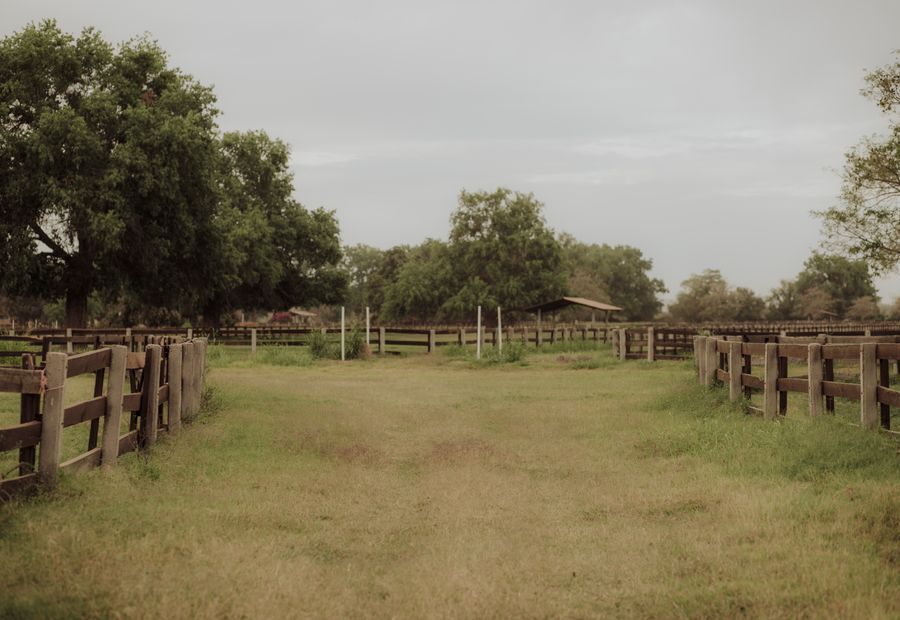
Topeka Farm Fence is a farm fence contractor building woven field fence, high tensile and electric fence, barbed wire, board fence, pipe corrals, and farm gates for pastures, horse properties, and row crop ground across Topeka, Auburn, Silver Lake, Rossville, Tecumseh, Berryton, Meriden, Hoyt, and Alma. We work Shawnee, Jackson, Jefferson, Osage, and Wabaunsee counties, Kansas.
A fence carries load, and the load goes to the ends. Every strand pulls toward the corner, so we build an H-brace there: two posts, a horizontal rail near the top, and a brace wire wrapped twice on the diagonal and twisted until it rings. Brace posts run six to eight inches across and go three and a half to four feet down. We backfill in lifts and tamp each one, because tamped soil grips the whole post and lets you reset it later, while concrete poured around a treated post holds water at the collar and rots it there. Wire is Class 3 galvanized, which carries about three times the zinc of Class 1, and woven fence goes up in Stay-Tuff fixed knot or Red Brand. Posts are CCA ground contact treated pine, hedge, or steel. Loose wire on driven T-posts with no brace at the corner is the fence that sags by the second summer.
Hedge Post Country
Kansas landowners planted thousands of miles of Osage orange hedgerows before barbed wire arrived, and the posts cut from that wood are still holding fence lines around Topeka today. Hedge is dense, heavy, and rot resistant without any treatment. The Kansas fence law even names an old Osage orange hedge as a form of lawful enclosure. We set hedge where a client has it or wants it, treated pine where he does not, and steel where the ground fights us.
Spacing, Tension, and Terrain
Line posts for woven and barbed wire run twelve to sixteen feet apart. We tighten that on hills and anywhere cattle crowd a corner. Steel T-posts go eight to twelve feet, and they hold wire up rather than hold it back. High tensile wire gets pulled to a set tension with a ratchet strainer and a spring shows the number at a glance. The fence follows the ground instead of running level across it, with tie-down posts in the draws so calves cannot crawl under and floodgates where a line crosses water. Kaw river bottom ground near Silver Lake and Tecumseh stays wet, so posts go deeper there.
Booking and Season
We build spring through fall and quote year round. Frozen or saturated ground is a real reason a build waits, and we will tell you that instead of setting a post in mud. Winter is when we walk lines and price work so the crew starts the day the ground thaws. (785) 555-0184 reaches a real person.
What are the regulations for cow fences in Kansas?
Kansas sets a spec for a lawful wire fence between neighbors. It needs at least three barbed wires, the top wire about forty four to forty eight inches off the ground, the bottom wire eighteen to twenty four inches up, and the middle wire centered between them. Posts go at least two feet in the ground and no more than twelve feet apart, and every wire has to be stretched tight and fastened to each post. Most working cattle fences we build in Shawnee County go beyond that, because the legal minimum is a floor and not a design.
Does Kansas make neighbors split the cost of a boundary fence?
Yes, in most cases. Kansas law puts adjoining owners on a partition fence in equal shares as long as both of them are using the land, unless the two of you write down a different deal. A neighbor who runs no livestock and does not want his ground enclosed cannot be made to pay a share. When two owners cannot agree, the county fence viewers step in and decide. Rules get applied at the county level, so call your county office before you count on a split.
How deep should fence posts go around Topeka?
Deeper than most people set them. Northeast Kansas clay swells wet and shrinks dry, and winter frost reaches down about three feet here, so a shallow post walks itself out of the ground over a few seasons. We put line posts two and a half to three feet down and corner and brace posts three and a half to four feet. The working rule is simple: the post sits as deep as the top wire is high.
What does farm fence cost per foot?
Price runs per linear foot and the fence type sets the range. Barbed wire is the cheapest run, woven field fence sits in the middle, and board and pipe cost the most. Three things move the number more than anything else: how much brush has to come off the line, how rough the ground is, and how many corners, ends, and gate openings the layout needs. Corners cost real money because each one is a full brace assembly. We walk the line and price the actual job.