Topeka Farm Fence: Farm Fence Installation in Topeka, KS
Topeka Farm Fence is a farm fence contractor licensed and insured in Kansas, building pasture and boundary fence across Shawnee County and the counties around it. We install field and woven wire fence, high-tensile and electric fence, barbed wire fence, board and rail fence, pipe fence and corrals, and farm gates and entrances. We clear the fence line and pull the old fence out before any of it goes in. Our customers run cattle, horses, goats, and sheep on ground in Shawnee, Jackson, Jefferson, Osage, and Wabaunsee counties.
Every strand on a fence pulls toward the end of the run, and the end assembly takes that whole load. We build an H-brace at every corner, end, and gate opening: two posts, a horizontal rail near the top, and a brace wire wrapped twice on the diagonal and twisted until it rings. Brace posts run six to eight inches across and go three and a half to four feet in the ground. We hang Red Brand or Bekaert Gaucho wire in Class 3 galvanized coating on CCA ground-contact treated posts or hedge. Driven T-posts hold wire up. They do not hold wire back.
Call for a Free Estimate- Licensed and insured in KS
- H-braced corners, ends, and gate openings
- Class 3 galvanized wire, pulled to tension
- Ground-contact treated posts and hedge
- Shawnee, Jackson, Jefferson, Osage, and Wabaunsee counties
Farm Fence Installation
A farm fence is a structure, not a roll of wire. The line posts hold the wire off the ground. The braced ends hold the wire back. Skip the brace and the corner post leans in toward the pull, the strands go slack, and the whole run bags out before the first winter is over. We start every job at the corners.
We stake the line, set brace assemblies at the corners, ends, gates, and hard turns, then run line posts twelve to sixteen feet apart, closer on rolling ground and where cattle crowd a corner. Wire goes on to a set tension with a ratchet strainer, not by feel. Post depth follows a rule worth knowing: the post should sit as deep in the ground as the top wire stands above it. More on farm fence installation.
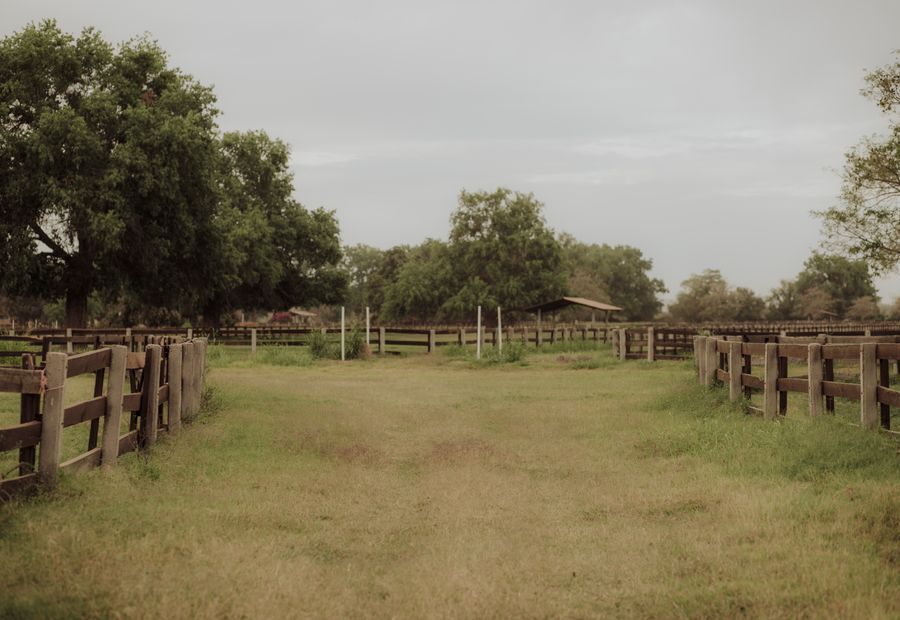
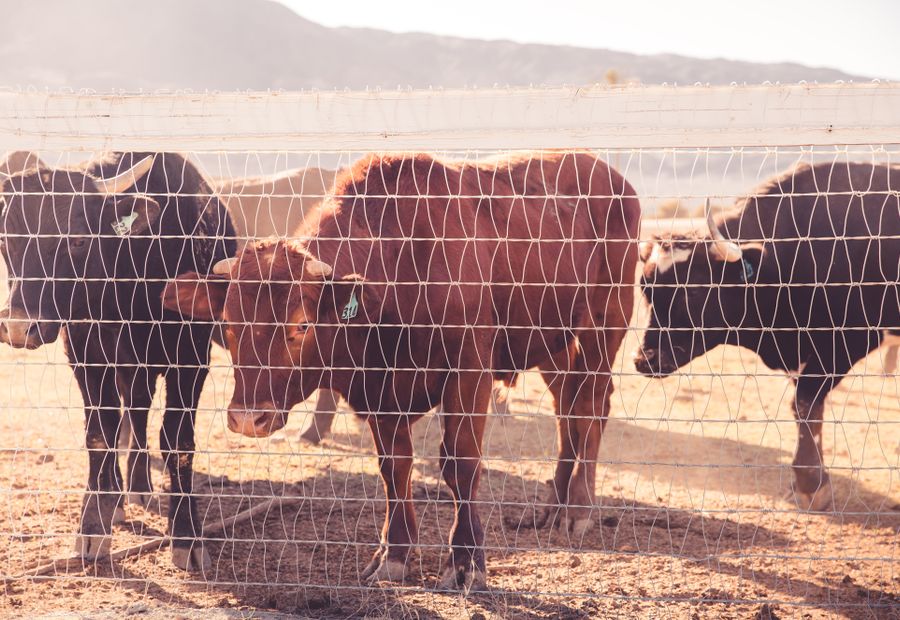
Field and Woven Wire Fence
Field fence is the workhorse of agricultural fence, and the knot decides how it behaves. A fixed knot ties each crossing with a separate wrapped wire, so the mesh cannot slip and stays square where the ground rolls. A hinge joint flexes under a leaning cow and springs back, which is cheaper and honest work on flat pasture. Rough ground is where the difference shows.
We stretch Stay-Tuff and Red Brand rolls off a jack against braced ends, then tie off and add a barbed top strand where cattle reach over. Mesh spacing follows the animal: tight graduated squares near the ground for goats and sheep, wider openings for cattle, small mesh for horses so a hoof cannot go through. Goats go through a fence, horses go over it, and cattle lean on it. More on field and woven wire fence.
High-Tensile and Electric Fence
Twelve and a half gauge high tensile smooth wire carries well over a thousand pounds before it gives. That is why it holds a straight line across a long run with fewer posts, and it is why the ends have to be stronger than a barbed wire fence needs. All that tension lands on the brace assembly. Weak ends and high tensile wire do not belong on the same fence.
We hang the wire on in-line strainers with tension springs so the load is visible at a glance, and we size the Gallagher or Speedrite energizer to the length of fence and drive enough ground rods to make it bite. Wire tightens in a Kansas January and slackens in a July heat, and a strainer takes that slack back out in year three without restretching a mile of fence. More on high-tensile and electric fence.
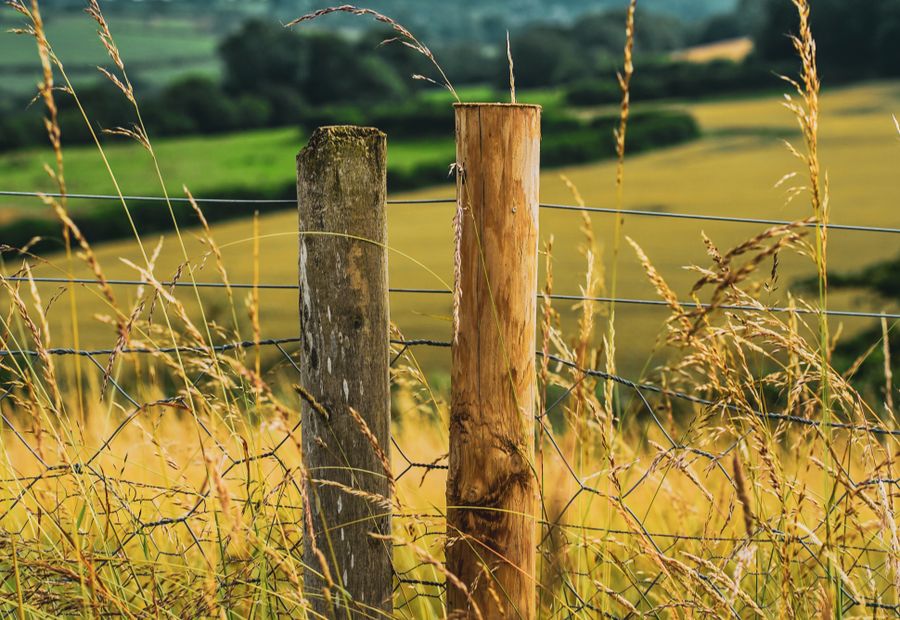
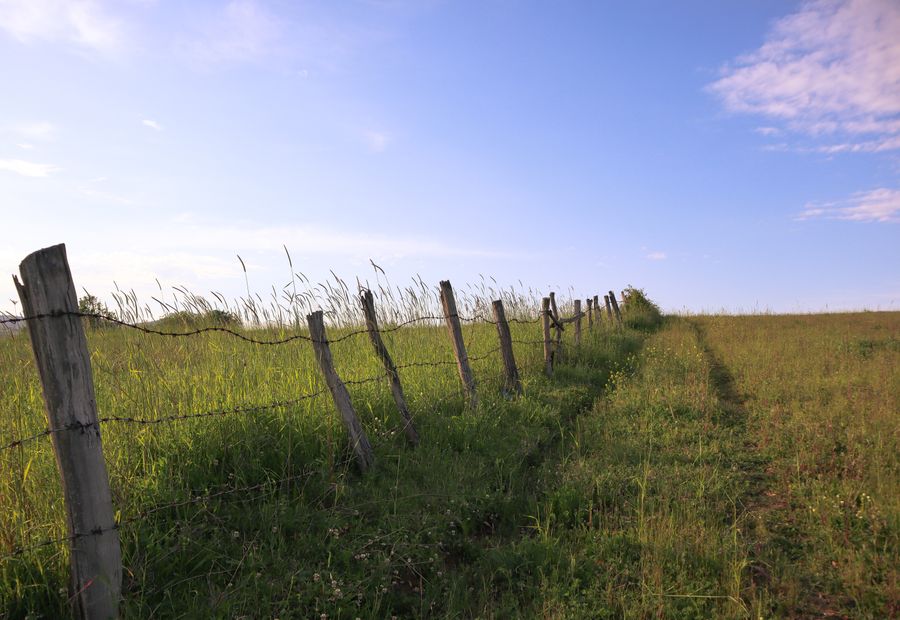
Barbed Wire Fence
Barbed wire is cattle fence and nothing else. Horses cut themselves on it and goats walk straight through it. A five strand run stands about four and a half feet tall with the bottom wire about a foot off the ground, and the spacing tightens toward the bottom because that is where a calf tries first. The Kansas fence law sets its own minimum for a lawful boundary fence, and we build to it or above it.
We run Red Brand two point and four point barbed wire or Bekaert Gaucho high tensile barbed, splice with proper wraps rather than knots, and stretch each strand against a wood corner. Driven steel T-posts carry the line between assemblies, which is exactly what they are good at. A corner is a different job and it gets a different post. More on barbed wire fence.
Board and Rail Fence
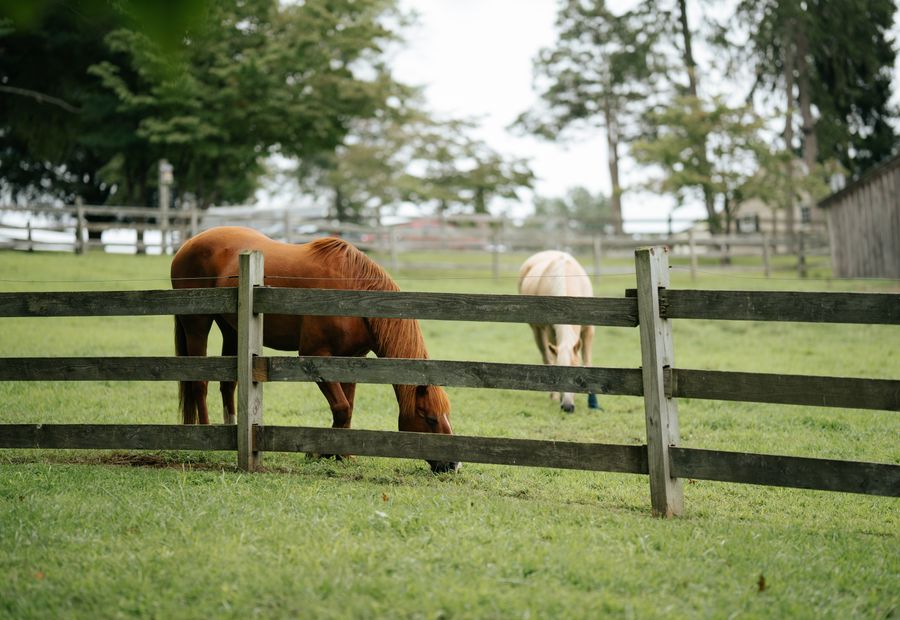
A horse needs to see the fence before it runs into it. That is the argument for board fence, and it is the reason horse people pay per foot for it. We build three board and four board runs in rough sawn oak or treated pine, posts on eight foot centers so every board lands on a post, set deep and tamped so the line stays true.
Boards go on the inside face of the post where the horse pushes, so pressure loads the fastener in shear instead of pulling it out. We back the lower bays with woven wire mesh where foals or mini horses share the paddock, and we paint or stain the run so the wood sheds water at the joints. Vinyl ranch rail is an option when nobody wants to paint again. More on board and rail fence.
Pipe Fence and Corrals
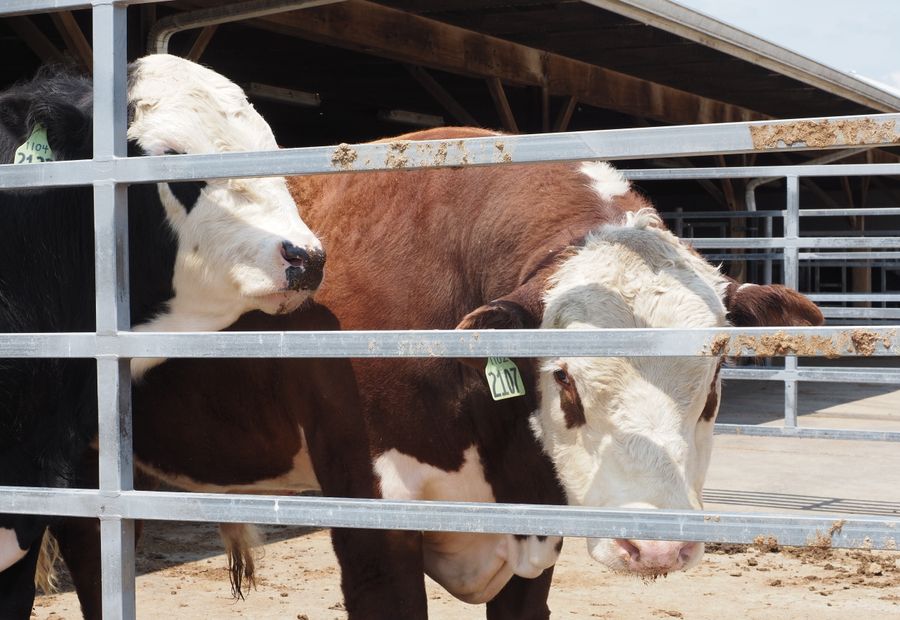
Where cattle get handled, wood breaks and wire bags. Working pens take the full weight of an animal that does not want to be there. Welded pipe and continuous rail take that abuse and keep taking it, which is why the pens hold up long after the pasture fence around them has been rebuilt twice.
We weld pipe fence and continuous rail, set steel posts in concrete footings below the frost line, and lay out corrals with a working alley, a crowding tub, and gates that swing where a person needs them. Priefert and Powder River panels, chutes, and headgates go in where a bolted system beats a welded one. Concrete belongs under steel. It does not belong around a treated wood post. More on pipe fence and corrals.
Old Fence Removal and Line Clearing
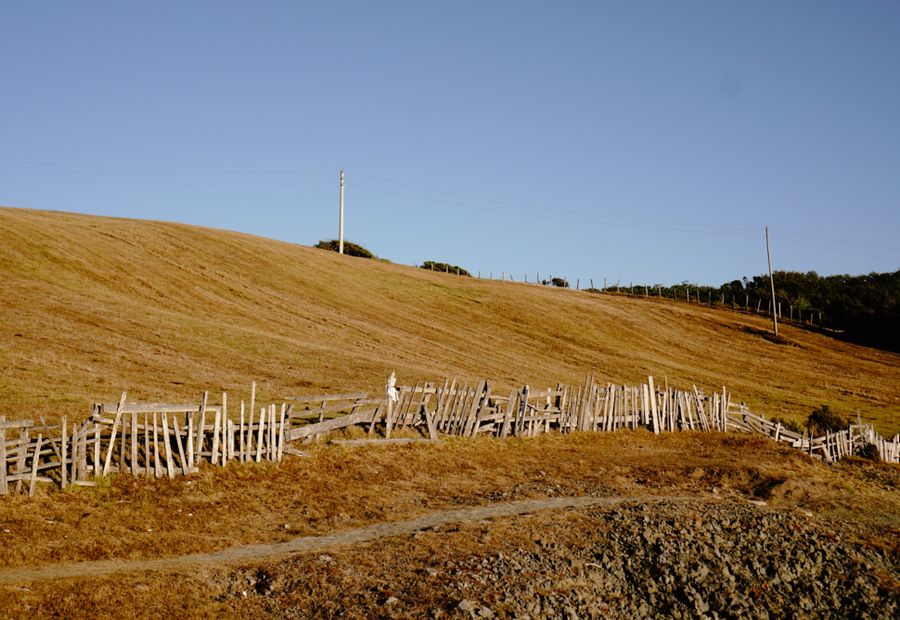
The first cost on most of these jobs is getting to the line, and it is the cheapest money on the job. Cedar has taken over fence rows all over northeast Kansas, and a hedge row left standing since the barbed wire era grows into the fence it used to be. Nobody can build a straight fence through brush.
We clear brush and trees off the line, pull old wire and rotted posts, roll the scrap, and haul it off so no wire ends up in a hay field or a tire. Then we survey and stake the run before a single hole gets dug. Building new fence over an old line without clearing it first buys the next crew the same problem. More on fence removal and line clearing.
Farm Gates and Entrances
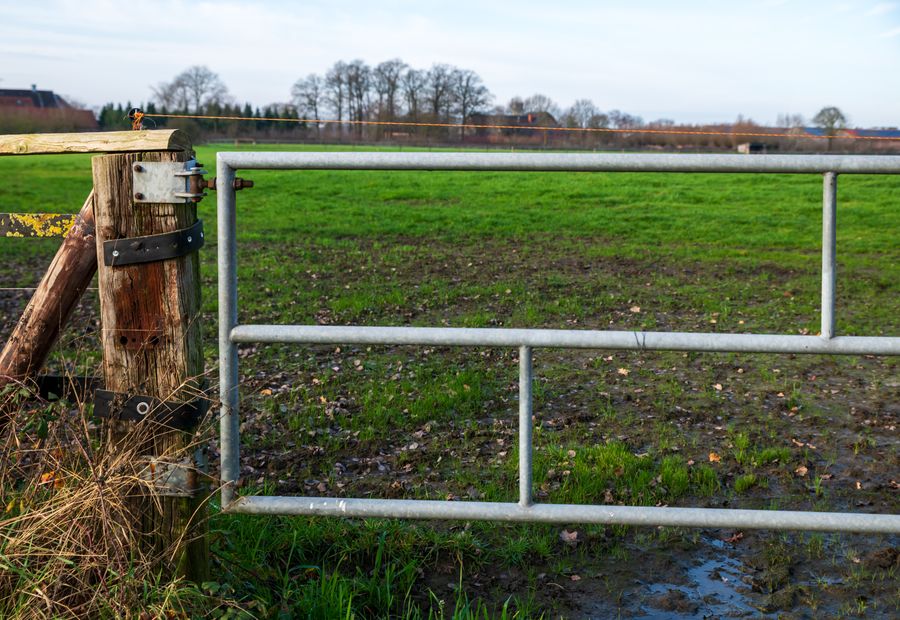
Gates fail before fences do. A gate hangs off one post and levers against it every time somebody swings it, all year, in both directions. When a gate starts dragging in the dirt, the gate is fine. The hinge post moved.
We set hinge posts deeper than any line post, brace them back into the fence, and use a steel pipe post in concrete on wide openings. Tarter and Priefert tube gates go on in the widths that suit the equipment, with walk gates where people cross on foot. We build ranch entrances with headers, and we pour cattle guard footings on ground that will carry a loaded truck. More on farm gates and entrances.
Why Landowners Around Topeka Call Us
- The braces carry the fence. Corners, ends, gate openings, and hard turns all get a full H-brace, and tall multi-strand runs get a double. That assembly is what turns wire tension into downward load on the posts. Start with farm fence installation.
- Posts go deep and get tamped, not floated in concrete. Backfill tamped in lifts packs the soil back to the density the auger took out, and the post can be reset later. Concrete poured around wood holds water at the collar. It matters most on a hinge post.
- Wire is a spec here, not a commodity. Class 3 galvanized coating carries far more zinc than Class 1, and soft wire stretches once and never comes back. See barbed wire and high-tensile fence.
- The fence follows the ground. Wire stays down through the draws with tie-down posts at the low spots, and floodgates go in where a run crosses water. A calf finds a gap under a fence run straight across a dip in the first week. That shapes a woven wire layout.
- The spec follows the animal. Cattle push, horses run through, goats climb and squeeze. We ask what you are keeping in before we quote a fence, and the answer changes the wire, the spacing, and the height. Horse people usually land on board and rail.
- Written before we dig. You get a free written estimate with the footage, the fence type, the corner count, and the clearing, on pasture fence and welded pipe corrals alike.
Hedge Post Country on Kansas Clay
Northeast Kansas sits on expansive clay. The ground swells when it takes on water and shrinks back when it dries, and it can do both in one season. That movement works a post loose from the bottom up. Winter finishes the job, because frost here reaches near three feet down and lifts anything set shallower. A post that walks a few inches a year is a fence that leans by year five.
Kansas farmers already solved part of this. Before barbed wire reached this country, they planted Osage orange in living fence rows across the state, and the wood cut from those rows became the hedge post. Hedge is dense, heavy, and it resists rot without any treatment at all. Fence lines around Topeka still carry hedge posts that were cut generations ago. The Kansas fence law still counts an old Osage orange hedge row as a lawful fence, which tells you how deep the tree runs in this state.
The ground changes as you move out from town. West and southwest, toward Wabaunsee and Osage counties, the Flint Hills start and the soil turns thin and cherty over limestone. That country stayed in native grass because it broke plows, and it is stocker and cow-calf ground today. Holes out there hit rock instead of clay. North and east along the Kaw, the river bottoms around Silver Lake, Rossville, and Tecumseh give soft, wet digging that swallows a post if it is not set deeper than the book says.
So the fence spec is not one spec. On clay uplands we set below the frost line and tamp hard. In the bottoms we go deeper still, and we hang floodgates where the line crosses a draw that runs after a rain. On Flint Hills rock we drill, and a hedge or steel post earns its keep. The wire is the same. What holds the wire is not.
How We Build a Fence
Walk the Line
We walk the run with you, count corners and gates, note the draws and the water crossings, and stake it. Boundary fence gets a survey line, not a guess. You get the footage and the price in writing first.
Clear and Pull
Brush, cedar, and overgrown hedge come off the line. Old wire gets rolled and hauled, and rotted posts come out of the ground. A clean line is what lets the rest of the build run straight.
Set the Ends
Corner and brace posts go in first, six to eight inches across, three and a half to four feet deep, backfill tamped in lifts. Then the H-brace: rail in, brace wire wrapped twice and twisted tight.
Line Posts and Wire
Line posts follow the fence type, twelve to sixteen feet for woven and barbed wire, eight to twelve for driven T-posts, eight feet on center for board. Wire rolls out and gets tied off against the braced ends.
Tension and Hang Gates
We pull each strand to tension with a ratchet strainer, add in-line springs on high tensile, hang the gates on braced hinge posts, and walk the finished run with you before we load up.
What Farm Fence Costs Around Topeka
Farm fence prices by the linear foot, and the fence type sets the range. What moves a quote inside that range is the corner count, how much clearing the line needs, how rough the ground is, and how far the gate is from the road. Every job gets a free written estimate before anybody digs.
| Fence Type | Typical Range | Notes |
|---|---|---|
| Barbed wire, five strand | $4 - $8 per foot | Cattle only. Wood corners, driven T-posts on the line |
| High-tensile and electric | $3 - $7 per foot | Fewer posts per mile, stronger end assemblies, energizer extra |
| Field and woven wire | $7 - $14 per foot | Fixed knot costs more than hinge joint and holds shape on hills |
| Board and rail, three or four board | $16 - $32 per foot | Oak or treated pine, plus paint or stain |
| Welded pipe fence and corrals | $20 - $45 per foot | Concrete footings, working pens and alleys priced by layout |
| Fence line clearing and removal | $2 - $6 per foot | Cedar and old hedge row cost more than open grass |
| Farm gates, installed | $500 - $1,800 each | Width, hinge post setting, and bracing set the price |
A short cross fence between two paddocks lands in the low thousands. A boundary fence around a quarter section runs well into five figures, because the length is the length and every corner is an assembly. Corners cost more than straight run, so a rectangular field fences cheaper per foot than a field with eight jogs in it.
What moves the price:
- Total footage, and how many corners and gate openings sit in it
- Clearing: open grass, heavy brush, cedar, or an old hedge row
- Ground conditions, from clay to river bottom to Flint Hills rock
- Wire spec, gauge and coating class, and knot type on woven wire
- Post choice: treated pine, hedge, or steel
- Access for the truck, the auger, and the wire trailer
Posts, Wire and Braces
Posts and What Rots Them
Wood posts rot at the ground line, where air and water meet, not at the tip. A post pulled after twenty years is often sound top and bottom and pencil thin in the middle. Pressure treated southern pine at ground contact retention stands in this soil for decades. Hedge lasts about as long untreated, and steel does not rot at all. Those are the three answers around here.
Wire Gauge and Coating
Twelve and a half gauge high tensile wire does not stretch until it is carrying well over a thousand pounds. Soft wire gives early, and once it has given it stays given. The coating decides the lifespan: Class 3 galvanized carries roughly three times the zinc of Class 1, which is the difference between a fence that outlives the loan and one that rusts out at the barbs.
The H-Brace
Two vertical posts, a horizontal rail near the top of both, and a brace wire wrapped twice on the diagonal and twisted with a stick. The rail pushes, the diagonal wire pulls, and together they turn the wire tension into downward force on the posts instead of a lean. Tall fences with many strands get a double H. This assembly is the whole reason a fence stays tight.
Tamped Backfill
We backfill in layers and tamp each one hard. That packs the column of soil back around the post so the post grips the ground the full depth of the hole, and it leaves the post resettable later. Concrete poured around a treated wood post traps water at the collar and rots it from the middle out. We put concrete under steel pipe instead.
Tension You Can Read
Tension is a number, not a feel. A ratchet strainer pulls high tensile smooth wire to a set load, and a spring on the line shows that load at a glance from the truck. Wire shrinks in the cold and grows in the heat, so a fence that was right in November is loose in July. The strainer is how you take slack back out in year three instead of rebuilding.
Frequently Asked Questions
What are the regulations for cow fences in Kansas?
For a boundary fence between two properties, Kansas describes a lawful wire fence: at least three wires, the top wire about forty four to forty eight inches off the ground, the bottom wire about eighteen to twenty four inches up, the middle wire centered between them, and every wire well stretched and fastened to the posts. Barbs average no more than nine inches apart. Most cattle fence we build runs five strands, which is above that floor. Counties can adopt their own options, so check with yours before you settle a line with a neighbor.
Does Kansas have a good neighbor fence law?
Not by that name. What Kansas has is a partition fence rule: adjoining landowners keep up the fence between them in equal shares, as long as both are occupying or improving the land, unless the two of them agree on something else. The common idea that each owner takes the half on his right is custom here, not law. Put any split you agree to in writing.
What are the laws regarding fencing in Kansas?
Two parts matter to a landowner. First, the equal shares rule above, with one exception: a person who runs no livestock and does not want the land enclosed cannot be made to pay for half. Second, when neighbors cannot agree, the county fence viewers settle it. Those are the county commissioners or people they appoint, and either owner can petition them. Anything past that is a question for your county and your attorney, not for a fence crew.
How deep do fence posts go in Kansas?
Corner and brace posts go three and a half to four feet down. Line posts go shallower, but still below the frost line, which reaches near three feet in this part of the state. The working rule we use: the post should sit as deep in the ground as the top wire stands above it. In Kaw river bottom ground we go deeper, because wet soil grips less. See farm fence installation.
Why do fences sag after a few years?
Three reasons, and it is nearly always all three. No real brace at the ends, so the corner leans in toward the pull. Posts set too shallow, so clay and frost lift them. And wire that was either never tensioned properly or tensioned once and never touched again. Fix the ends first. A tight wire on a leaning corner just pulls the corner over faster.
How far apart should line posts be?
It depends on the fence. Woven wire and barbed wire line posts go twelve to sixteen feet apart on level ground. Driven steel T-posts go eight to twelve. Board fence follows the board, so posts land on eight foot centers. We tighten the spacing on hills, in draws, and anywhere cattle gather, because that is where the wire takes the most push.
Are hedge posts still worth using?
Yes, where you can get them. Osage orange is dense and rot resistant enough to stand untreated for a working lifetime, and there are hedge posts in fence lines around here older than the people who own the ground. Supply is the catch, since cutting and hauling them is slow work. Treated pine at ground contact retention is the practical substitute and it lasts.
Should you set wood posts in concrete?
No, not a treated wood post in the ground. Concrete forms a collar that holds water against the wood and rots it from the middle out, and it makes the post a demolition job when it needs replacing. Tamped backfill grips the whole column of soil and can be pulled and reset. Concrete does belong under steel pipe, which is how we set corral posts.
What fence keeps goats in?
Fixed knot woven wire with graduated mesh, tight at the bottom, and no climbable footholds. Goats do not jump a fence, they find a gap and press through it, or they climb a hinge joint that flexes under their weight. Add a hot wire at nose height on the inside and the testing stops. More on field and woven wire fence.
Is barbed wire safe for horses?
No. A horse that panics runs into the fence rather than stopping at it, and barbs open a leg. Horses need a fence they can see and one that gives a little. Board and rail is the standard answer, sometimes backed with woven wire mesh for foals. Vinyl ranch rail does the same job without repainting. See board and rail fence.
Can you build fence in winter?
Winter is quote season here. Frozen ground and saturated ground are both real reasons a build waits, because a hole augered in frozen clay does not backfill and tamp the way it should. We measure, price, and schedule through the winter, and we build once the ground thaws. In cattle country the calls come after calving and before turnout.
Do you take out the old fence?
Yes, and we prefer to. Old wire buried in grass ends up in a tire or a hay bale, and rotted posts push a new line out of true. We pull the wire, roll it, dig or pull the posts, clear the brush off the line, and haul all of it away. See old fence removal and line clearing.
Are you licensed and insured?
Yes. We are a licensed and insured fence contractor working across Topeka, Shawnee County, and the counties around it. You get a written estimate with the footage, the fence spec, and the price before any work starts.
Fencing Shawnee County and the Country Around It
We build farm fence across Shawnee, Jackson, Jefferson, Osage, and Wabaunsee counties. The ground changes as you go: clay uplands near town, Kaw bottom ground along the river, and thin limestone soil out toward the Flint Hills. We set the fence to match the ground it stands in.
Ready to Price a Fence?
Call (785) 555-0184 for a free estimate. Tell us roughly how many feet you need, what you are keeping in, and whether the line is open grass or grown up in cedar and hedge. Tell us whether it is a boundary with a neighbor or an interior cross fence. You will get a straight read on the fence type that fits the animal and the ground, a price per foot, and an honest answer on whether the old fence can be tightened or has to come out. Quotes go out all winter. Building starts when the frost is out.