Farm Gates & Ranch Entrances in Topeka, KS
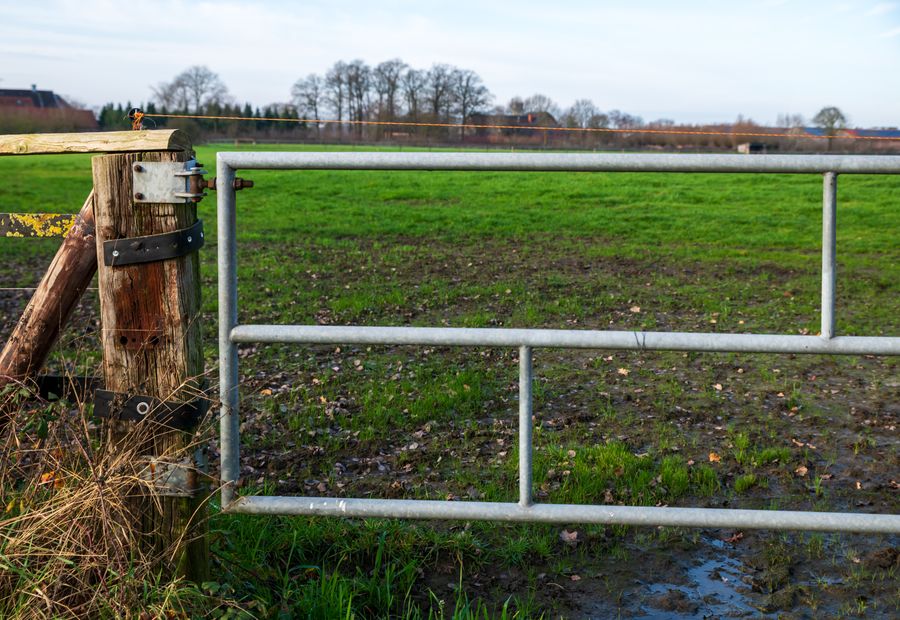
Topeka Farm Fence hangs farm gates and builds ranch entrances for pastures, driveways, and working pens around Topeka. We set tube gates, walk gates, cattle guards, and entrance headers throughout Shawnee, Jackson, Jefferson, Osage, and Wabaunsee counties, Kansas, from Silver Lake and Tecumseh to Meriden, Alma, and the acreages in between.
Gates are where fences fail first, and it is almost never the gate. We hang Tarter and Priefert galvanized tube gates in six to twenty foot widths on hinge posts set deeper than any other post in the run, three and a half to four feet down here, and braced back into the fence line with a horizontal rail and a twisted brace wire. Big gates get a steel pipe hinge post in concrete. Hardware is bolt through with a lag hinge and a chain latch that a cow cannot work with her nose. A twelve foot gate hung on a line post that was never braced pulls that post over inside a season and then drags a groove in the driveway.
Cattle Guards and Footings
A cattle guard is a hole in the fence that cattle will not cross, and it saves you a hundred stops a year. It also carries every loaded truck that comes onto the place. We build a bearing pad under each end below the frost depth, set the guard level, and grade the approaches so runoff moves away instead of washing the footing out. Northeast Kansas clay heaves under anything set shallow, and a guard that heaves stops sitting flat.
Walk Gates and Working Pen Gates
Not every gate is for a tractor. A four foot walk gate next to the main opening gets used daily and should swing easy on light hardware. Working pen gates are the opposite. Those take crowding cattle at close quarters, so they run heavy tube, hang on pipe posts, and latch from both sides so a person can work them without climbing. Sorting gates get a stop so they hold where you put them.
Entrances That Set the Place Off
The entrance is the part everyone sees. We build headers in pipe or timber, hang the gate to clear the drive, and tie the whole thing back into the board fence or pipe run along the road. Quotes go out year round and we build once the ground thaws. Call (785) 555-0184.
How wide should a farm gate be?
Match it to the widest thing that has to go through. Twelve feet handles a pickup and a small trailer and is the common pasture gate. Sixteen feet takes a tractor with an implement. Twenty feet is what you want at a hay field or anywhere a semi has to swing in. A four foot walk gate beside the big one saves you opening a heavy gate every time you check water.
Why does my gate drag on the ground?
The hinge post moved. A gate hangs off one post and levers against it every single time it swings, and that leverage pulls the top of the post toward the opening. Once the post tips, the far end of the gate drops. Resetting it means a deeper hinge post braced back into the fence line, not a shim under the latch.
What does a cattle guard cost to install?
The guard itself is the smaller half of the number. The install is a footing, and the footing is what holds up. We dig out the crossing, build a level bearing pad on each side below the frost line, set the guard on it, and backfill the approaches so water runs away from it rather than pooling under it. A guard dropped in a hole and covered with dirt settles and starts eating axles.
Do you build ranch entrances with a header?
Yes. A pipe or timber header across the drive gives you the ranch entrance look and a place to hang a name sign. The two upright posts carry real weight and real wind load, so they go deep and get concrete. We build headers in pipe to match a corral or in heavy timber to match a board fence, and we hang the gate to swing clear of the crossing.